



Angel Marco
Race Car Specialist
With a background in motorsport engineering and a lifelong love of racing Angel is happy to support in sourcing, restoring or selling your cars.

Looking for something exceptional?
Speak to a specialist about this car.
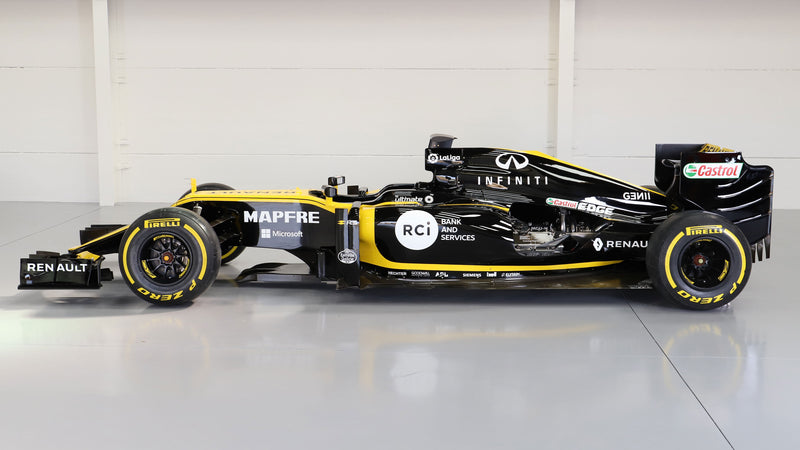
A unique opportunity to own a genuine F1® race car that competed across the full 2014 Formula One season during the modern turbo hybrid era, before being repurposed into a promotional tool for Infiniti.
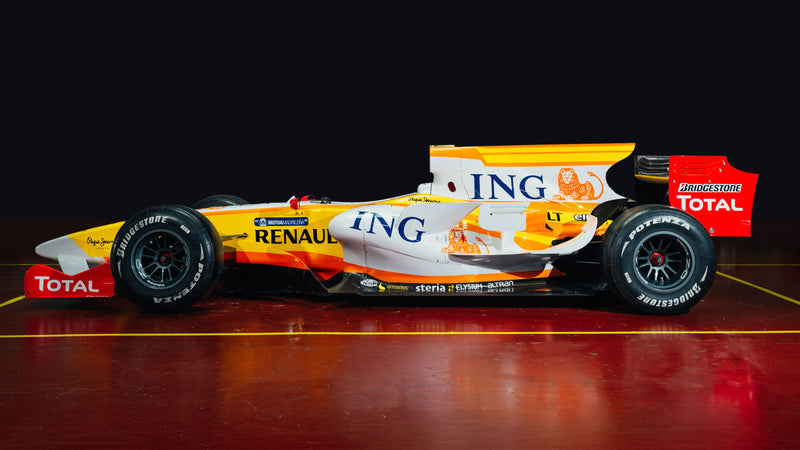
Chassis 108/E22-03 was originally driven by Romain Grosjean in the 2014 F1® World Championship and is now adorned in the striking R.S.19 livery, as driven by Daniel Ricciardo.
The Enstone-based team’s history is fascinating, evolving from Toleman to Benetton, Lotus, Renault and now Alpine. The story begins with Toleman, which rose to prominence in 1984 by recruiting a young rookie, Ayrton Senna. Benetton acquired the team in 1985 and, in 1989, brought in Flavio Briatore, who assembled a formidable line-up including Ross Brawn, Rory Byrne, Pat Symonds, Nelson Piquet and Michael Schumacher.
The team soon gave Schumacher his first victories and the first two of his historic seven Drivers’ Championships. In 2000, the team was sold to Renault and, within five years, a young Fernando Alonso, aided by his team-mate Giancarlo Fisichella, delivered back-to-back World Championships. In 2010, Renault sold part ownership of the team to Lotus Cars. It was during this period, between 2012 and 2015, that this very car was built.
2014 was a critical year in the history of modern F1, with the introduction of the new 1.6-litre V6 hybrid power unit. This engine was notoriously complex and required all manufacturers to dig deep in the search for performance, with cars delivering in excess of 900 bhp.
Chassis E22-03 was used by Romain Grosjean as his primary car and completed every race that season, with a best finish of eighth at the Monaco Grand Prix.
The car completed 19 races, and proof of this exists under the seat, where one of the electronic enclosures retains a track map from its final race in Abu Dhabi.
Its mileage was not limited to races. Esteban Ocon, Alex Lynn and Charles Pic tested this car in Abu Dhabi in 2014, while Pastor Maldonado joined Pic for a test in Barcelona in May. With a comprehensive racing and testing history, this car covered 14,721 km during its life. It is now presented as a rolling chassis with a display power unit.
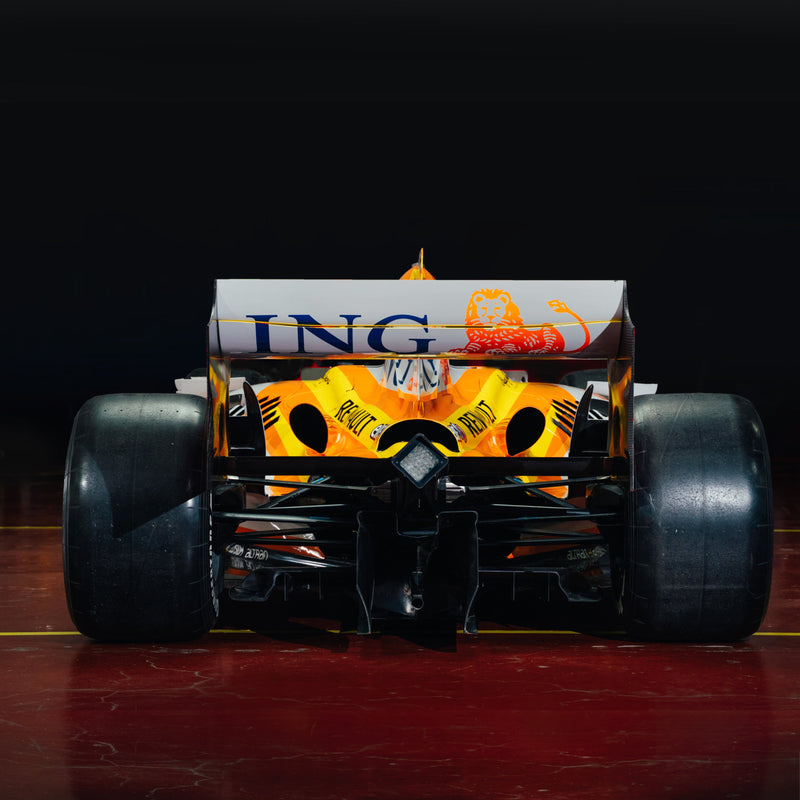
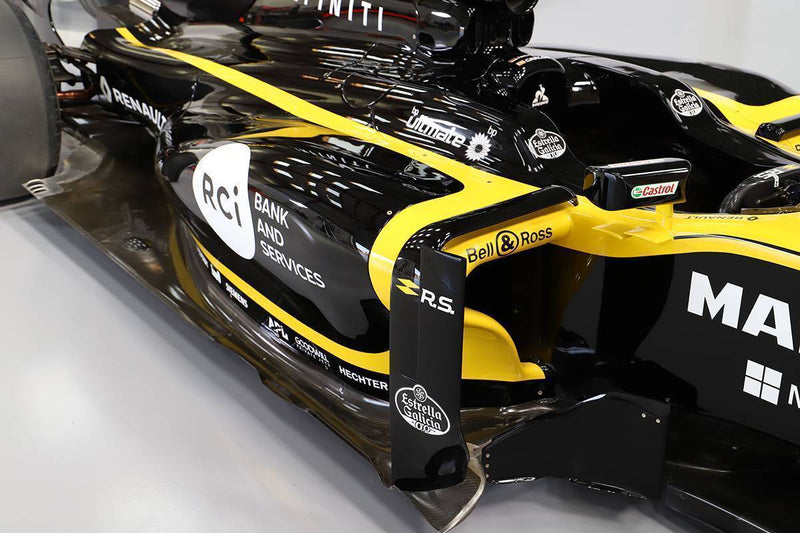
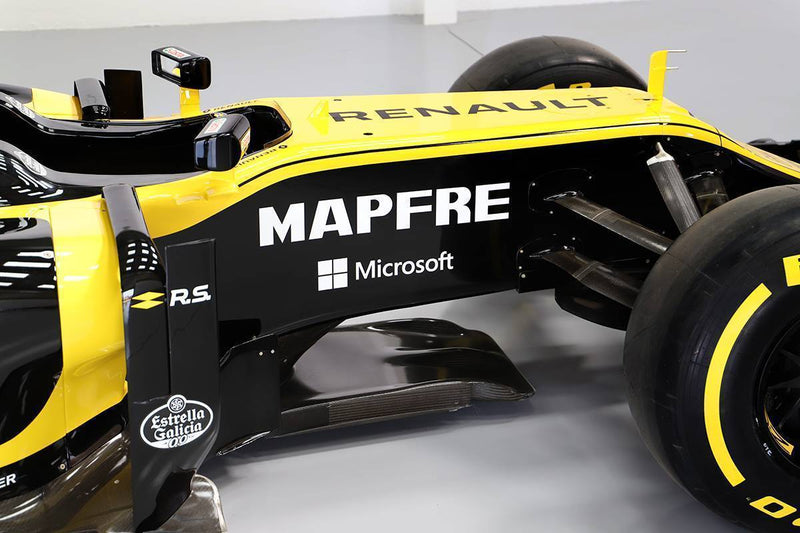
The livery itself is striking, with sweeping tones of yellow and black making it unmistakable. The French Tricolore and Renault badge on the nose are complemented by the placement of contemporary sponsors.
After completing its active career, the car entered the Lotus heritage collection until 2018, when the team, then under Renault ownership, provided it to partner Infiniti for display purposes.
This chassis was subsequently removed from storage and repainted in the 2019 Renault R.S.19 colours, and paired with an incredibly rare, near-complete Renault Sport F1-2014 power unit. This feature sets the car apart from its contemporaries, as it is exceptionally rare for a turbo hybrid power unit to be available in the public domain, given the secretive nature of manufacturers’ engine designs.
This Renault Energy F1-2014 unit is a focal point of the car and is visible through a unique cut-out section in the sidepod.
The car retains most of the components from its time as a race car.
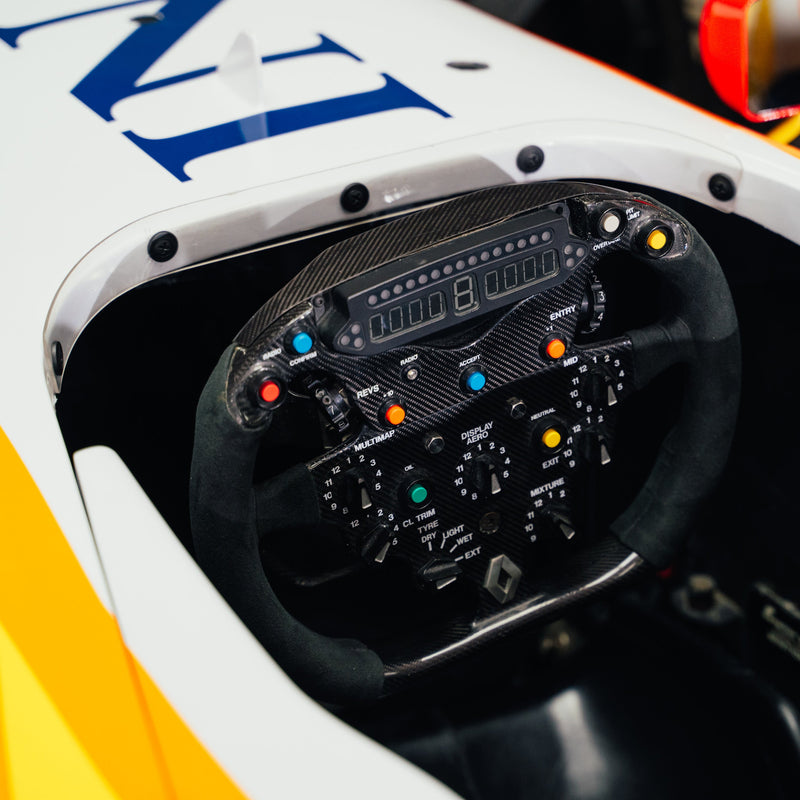
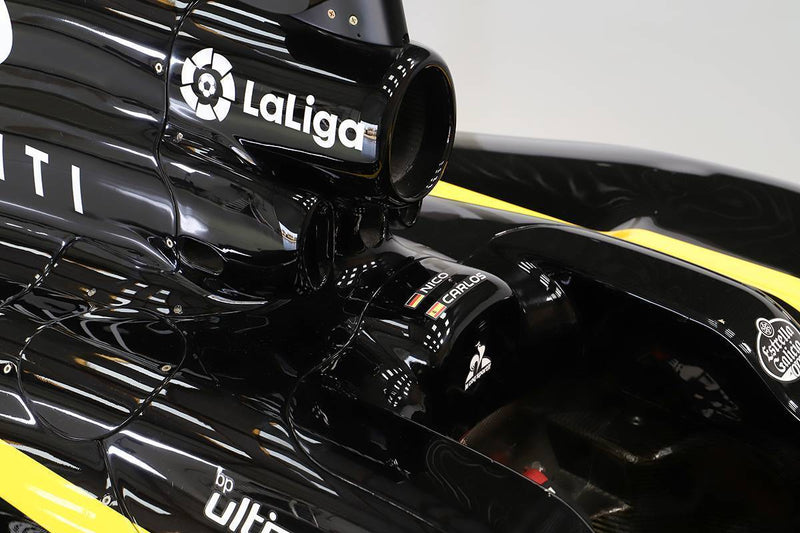
The cockpit is complete with a race-used steering wheel, drinks tube and seat. Lifting the seat reveals that wiring looms and electronic enclosures remain in place, excluding the ECU, electronics and all F1®-mandated sensors, loggers and chassis driver switches. The FIA-mandated extinguisher system also remains in place.
The braking system is complete with the original carbon discs, callipers and brake ducts. The front end of the car is complete and retains the correct carbon composite structure, wishbones, uprights and steering rack. Both sidepods feature complete radiators along with the air-to-water charge cooler.
The engine is presented in near-complete condition, retaining most of the intake system and still housing the air filter it likely last raced with. The engine retains the MGU-H, with both the hot and cold sides complete with all connectors, along with the MGU-K mounted on the side. Looking through the exhaust outlet reveals that the turbine impellers on the hot side remain in place.
Behind the engine sits a complete gearbox housing, with a visible input shaft suggesting that internal components are still installed. Enstone removed the original dual-tusk nosecone and replaced it with one to match the modern livery. The remainder of the bodywork is to race specification, aside from the rear wing, which has had its DRS actuator removed.
This is a large-format item and does not qualify for standard shipping rates. This item is located in France. A custom shipping quote will be provided following a successful winning bid. Alternatively, buyers may arrange their own courier (administration fee applies). Upon a successful bid, a deposit will be required. A full shipping quote will then be issued, with the remaining balance due before dispatch.
 Official F1® Licensed PartnerAuthorised by Formula 1® and the teams.
 Guaranteed AuthenticityMeticulously researched and verified
 Unrivalled ProvenanceShow cars and race cars with verified history
 Market Leading QualityTrusted by teams, collectors and partners
Discreet sourcing, buying and selling of rare Formula 1® race cars, show cars and private collections.
Our specialists source the rarest cars in Formula 1®. Tell us what you are looking for.
Angel Marco
Race Car Specialist
With a background in motorsport engineering and a lifelong love of racing Angel is happy to support in sourcing, restoring or selling your cars.
Trusted by collectors worldwide
Thank you to the F1 Authentics team for helping me sell my car and recognise its true market value. I look forward to dealing with you again if I ever sell the new one.
As a race car collector, the ultimate goal was always to own a Formula 1 car. I cannot thank the team at F1 Authentics enough for their advice and guidance.
To say I own a modern F1 car has been a dream and the reason I do what I do. Thank you to the team for helping me achieve this!
Opening the garage and seeing a Red Bull car will never get old. Being able to share this with my kids makes it event better. Thank you to Phil and the team for making the impossible a reality.
Yes. Our officially licensed Show Cars are created in partnership with Formula 1® and the respective Formula One teams, with exceptional attention to the design, detailing and finish of the original car.
For heritage and race-used cars, provenance and authenticity are carefully researched and verified by our specialists.
Key specifications, dimensions and details are presented on each individual car page. For further technical information, provenance, condition reports or specific requirements, our specialists are available to provide additional documentation and discuss the car with you personally.
Our collection includes exceptionally limited Show Cars, historic Race Cars and privately sourced examples, with availability subject to change.
To confirm the current status of a particular car, please submit an enquiry. A dedicated specialist will discuss availability, lead times and the next steps for acquisition with you.
Yes. Alongside our officially licensed Show Cars, we offer genuine Formula 1® cars, from factory-built rolling chassis to cars that competed in the FIA Formula One World Championship. Some are offered privately and availability changes, so please speak to a specialist about what is available now.
A real Formula 1® car is a chassis built by the team to race or test. It carries its own history: the drivers, the circuits and often many of the components it ran with. Some are rolling chassis and a few are still in running order.
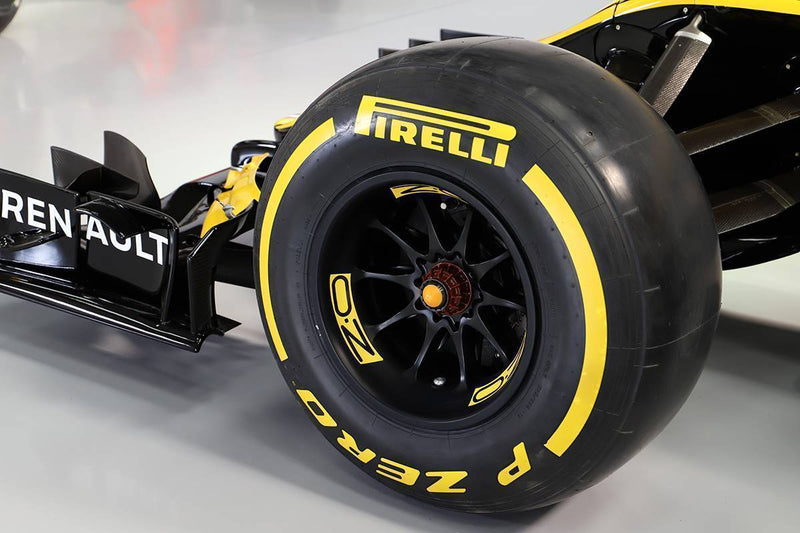
A Show Car is a full-scale replica of the race car, made for display rather than the track. It has no engine or gearbox and is built to match the look and detail of the car on the grid, with features such as carbon fibre components, official Pirelli tyres and functional steering on our latest models. That makes it the natural choice for a private collection, a gallery, a showroom or a hospitality space.
Yes. Our Show Cars are full-scale replicas of the race cars they represent. A specialist can confirm the exact dimensions of any car and advise on space, access and installation for your location.
Yes. We deliver worldwide. Our team has longstanding experience in global trade and single-seater car transport, and will provide a bespoke shipping quote for your car and location. Import duties and local taxes vary by destination, and your specialist will talk you through what applies.
Sign up to our mailing list. Never miss a moment with F1 Authentics.
By signing up you agree to our Terms & Conditions. You can unsubscribe whenever you want. Your data will be handled in accordance with F1 Authentics Privacy Policy
You have copied the placement for the Product Page.
Go back to the App Embeds section, and in the Paypal Advanced Settings, paste the copied value into the Product Page field and click the 'Save' button in the top right corner.